TL;DR:
- Yoast SEO co-founder Joost de Valk says most websites don’t need a CMS like WordPress anymore
- He’s technically right – and it doesn’t matter for most business owners
- Static sites are faster and cleaner, but the people pushing them are developers solving developer problems
- AI isn’t ready to replace the CMS editing experience – today’s AI tools are still flagging basic website tasks as too complex for non-technical users
- WordPress complexity isn’t the problem. Unmanaged WordPress is the problem.
I first read an article about another article, then read the original article, and here’s my take on them both. 😉
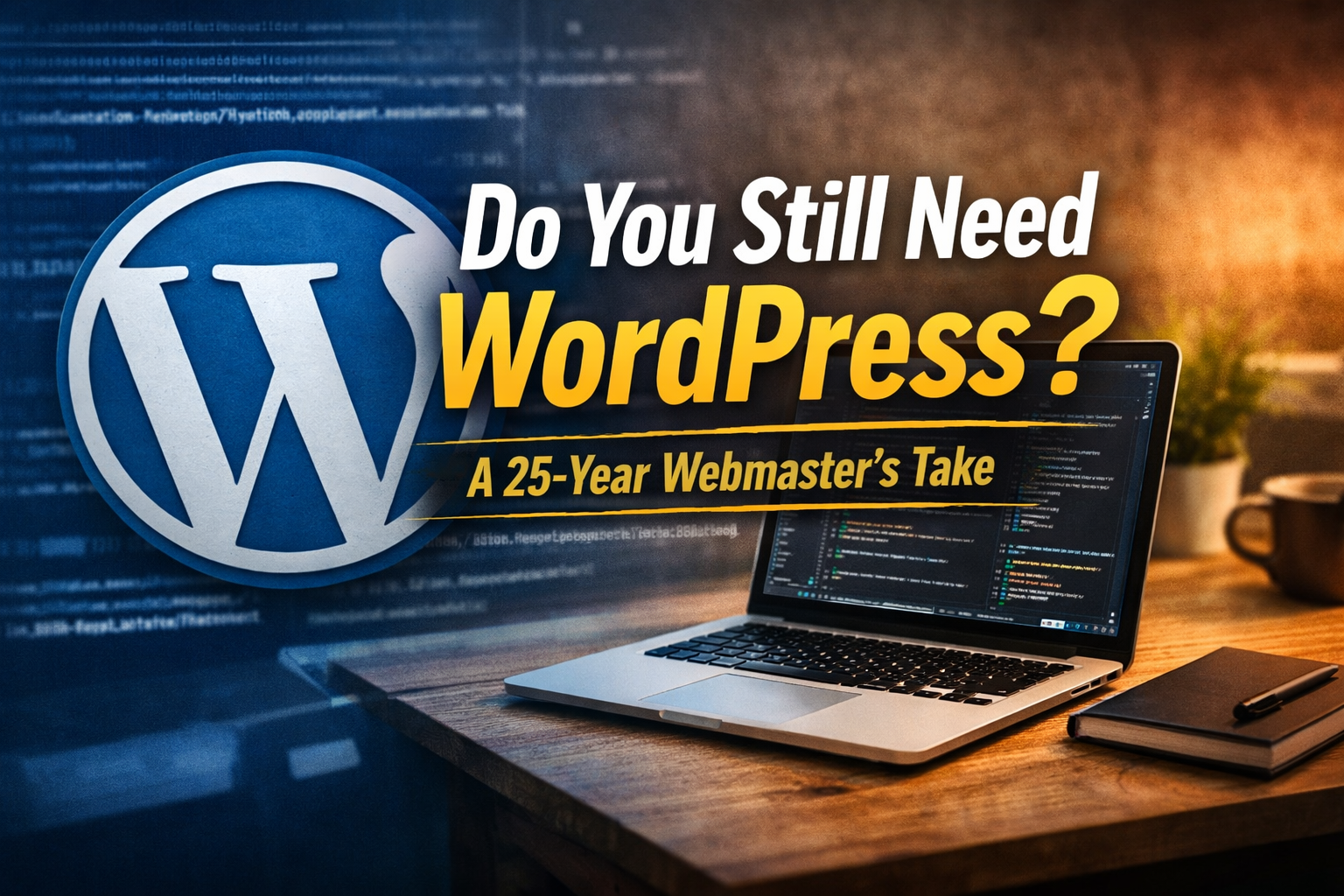
Search Engine Journal published a piece this week covering a blog post by Joost de Valk – co-founder of the Yoast SEO plugin – arguing that most websites don’t need a content management system (CMS) like WordPress anymore. The headline made it sound like a hot take. So, I went and read Joost’s original post.
He’s more measured than the original article’s headline drama suggests.
What Joost Actually Said
Joost migrated his personal blog from WordPress to Astro, a static site generator (a tool that builds plain HTML pages from simple text files – no database, no server-side processing). His page code went from over 1,400 lines to about 180. Faster, cleaner, no plugin conflicts, no render-blocking resources from things he forgot he installed.
His core argument: most websites are just a handful of pages and maybe a blog. A full CMS is overkill for that.
He’s not anti-WordPress. He’s still building his new project, Rondo, on WordPress because it needs dynamic functionality – user accounts, content that changes per visitor, application-level features, etc. He’s clear that complex sites still need a CMS platform.
But he also can’t really be anti-WordPress. He built Yoast SEO. He made his fortune building tools for WordPress and Shopify – both CMS platforms, not static sites. What he’s doing now is positioning himself in the static site space, too. That’s not a hot take. That’s a business pivot.
Where He’s Right
Static HTML sites are faster than any CMS-based site. That’s been true since before WordPress existed. I know this firsthand – I built static HTML sites for years before moving clients to WordPress. Those sites ranked well and handled traffic that would have buckled a WordPress install.
Joost is also right that SEO plugins aren’t magic. They output HTML – meta tags, sitemaps (a file that tells search engines what pages exist on your site), structured data (code that helps search engines understand your content), Open Graph tags (the data that controls how your link looks when shared on social media). Any static site generator can produce the same HTML, often cleaner. No plugin needed.
And WordPress bloat is real. I fight it every week. PHP compatibility issues (the programming language WordPress runs on getting updated while plugins don’t keep up), CPU overloads from poorly coded plugins, broken updates, security patches that break other things. The overhead is constant.
Where His World and Mine (nor My Clients) Don’t Overlap
Joost is a developer. His audience is developers. The people cheering his post are developers who can push markdown files to GitHub (a code hosting platform where developers store and publish files) and debug a failed deploy before lunch.
My clients run law firms, non-profits, and service businesses, all while wearing a million business role hats. They need to log in, change the phone number, and get back to work. They’re not editing code files. They’re not going to.
SEJ’s conclusion on this is right: generating a static site with Astro still requires technical knowledge, and it’s nowhere near as easy as using WordPress to get online. WordPress 7.0 is shaping up to make publishing even simpler. Static generators may become a real option someday, but they’re not there yet for the average business owner.
I’ve Seen This Movie Before
Joost’s vision triggered a memory for me. Back around 2005, before I moved my clients to WordPress, I hand-coded their websites and gave them Adobe Contribute – basically a consumer version of Dreamweaver (a popular web design tool at the time) that let them make minor edits and publish changed pages with a button click.
The results? Most clients were frustrated, didn’t use it, or forgot the steps within weeks. And that was practically a push-button-and-you’re-live system.
Joost’s prediction is that AI will eventually let people edit static sites through conversation, making the CMS admin panel unnecessary. His vision feels like going back to that Contribute era except with more steps. If clients couldn’t handle the literal “open software, find pages, type changes, click publish” tool twenty years ago, they’re not managing static site deployments through AI chat now.
AI Isn’t Ready Yet for This
Here’s the part of this debate that nobody is talking about.
Today – the same day I read these articles – an AI tool I was using flagged concerns about a recommendation to a client’s site where AI-generated code would go into a WP Bakery (a WordPress page builder plugin) page. A simple copy-and-paste workflow. I thought the specific client could handle it. The AI agent freaked out.
I’m out here preaching AI adoption to my clients every day, folks. I believe in these tools. But AI still hallucinates (gives confidently wrong answers), most people don’t know how to prompt it effectively yet, and business owners are still – rightfully – cautious about using it. If AI can’t even trust itself with a basic website update, we are not ready for non-technical users managing static site deployments through conversation.
The Real Problem Isn’t WordPress
WordPress powers roughly 40% of the web for a reason. It gives non-technical people a way to manage their own content with a visual editor, a login screen, and an update button. Hosting companies build one-click installs around it.
The bloat, the security issues, the plugin conflicts – those are real. But they’re management problems, not platform problems. An unmanaged WordPress site is a liability. A properly managed one is still the best option for most small and mid-size businesses – my clients.
The complexity Joost is complaining about? That’s exactly why my clients hire someone like me. Someone who’s been in the WordPress trenches for over two decades and knows which plugins will crash a site and which ones actually earn their keep.
Developers are solving the developer experience. My clients need the client experience solved.
Not Sure If Your WordPress Site Is Being Properly Managed?
If your site is slow, throwing errors, or you’re not sure when it was last updated – that’s not a WordPress problem. That’s a management problem. Contact me for a consultation and let’s take a look at what’s actually going on under the hood.